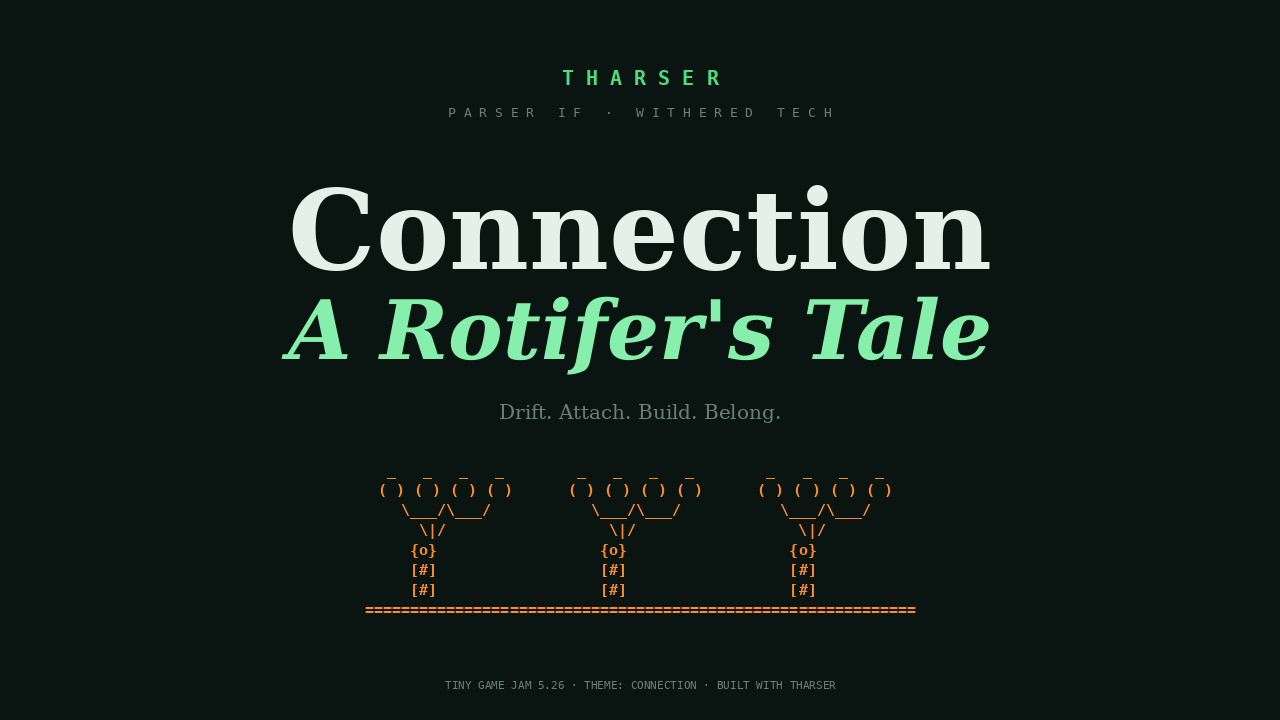
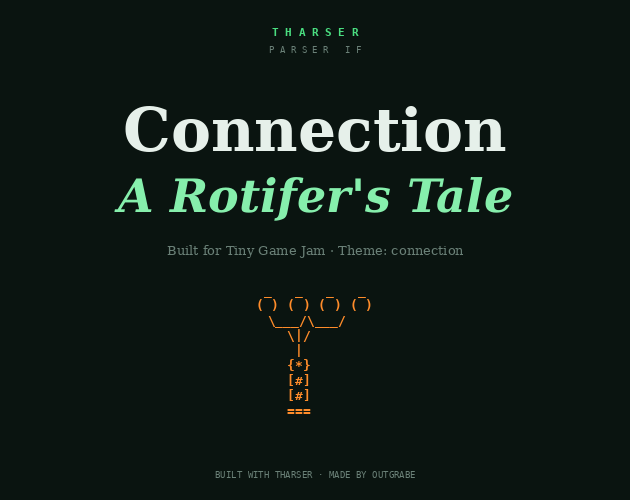
Connection: A Rotifer's Tale
A bonafide Thumby game, running in a custom-built Thumby emulator wrapper.
The thing you're playing in this browser window is the exact same game that runs on a TinyCircuits Thumby — the 72×40 OLED keychain handheld. The Thumby device runs MicroPython on a tiny screen; the wrapper around the game on this page is a from-scratch web emulator built to give browser players the same experience: same letter wheel, same A / B buttons, same piezo audio, same six-by-five-character screen. Same engine. Same game.json. Two targets.
Get the Thumby device build from the downloads list below — install instructions are included.
The game
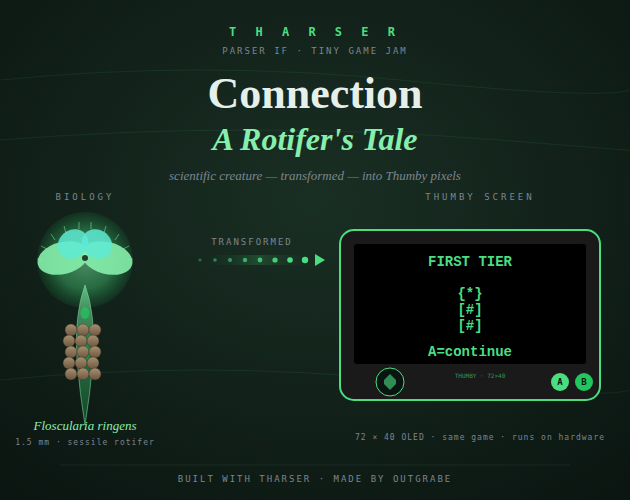
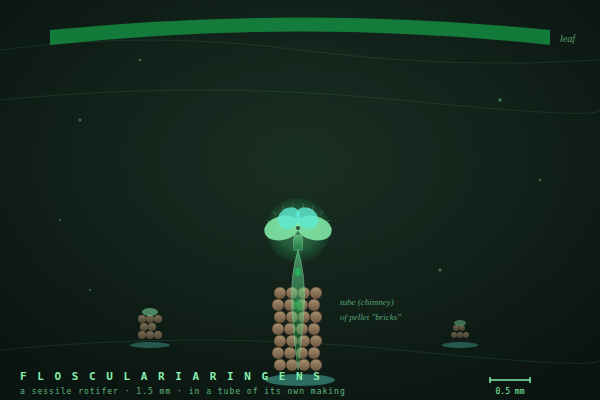
You are a juvenile Floscularia ringens — a microscopic freshwater rotifer, less than 1.5 mm long, free-swimming for less than a day before you must find a place to stay forever. Drift through the pond. Find the underside of a water lily leaf. Attach. Grow your four-lobed corona, the flower-shaped wheel that gives the species its name. Gather debris from the currents and stack pellets — brick by brick — into a chimney tube around your body. When your tube rises among the others on the leaf, the colony recognizes you. You are home.
How this hits the theme — connection
The theme is interpreted on three levels at once:
- Physical attachment. Floscularia is a sessile organism. The hatchling is free, but for less than a day. To survive, it must commit irrevocably — find a substrate, grip with its foot, fuse permanently. The pivotal verb of the game is
use leaf: the moment of physical connection to the world. - Building. Once anchored, the rotifer constructs its tube one pellet at a time, mixing bacteria, detritus, and its own mucus into uniform bricks. Each pellet is a small act of connection — to the previous brick, to the foundation, to the chimney rising around the body.
- Belonging to a colony. Floscularia and its relatives tend to settle near each other on the same leaf. A single tube is a structure; a colony of tubes is a community. The game's win condition isn't completing your own tube — it's joining the colony.
The naturalist P. H. Gosse wrote in 1851 that Melicerta ringens (the old name for Floscularia) "is at once brickmaker, mason and architect, and fabricates as pretty a tower as it is easy to conceive." The game asks: what does it mean to connect yourself to a place, by building?
How to play
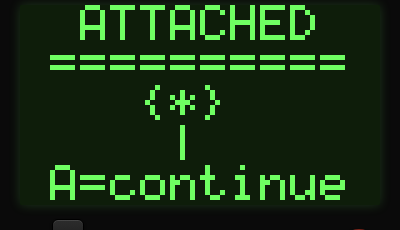
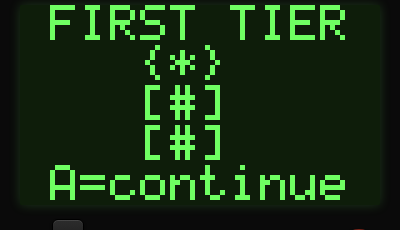
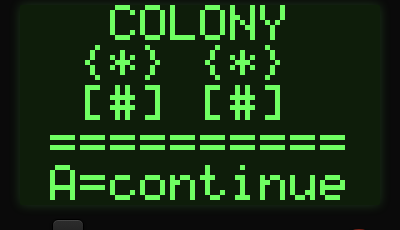
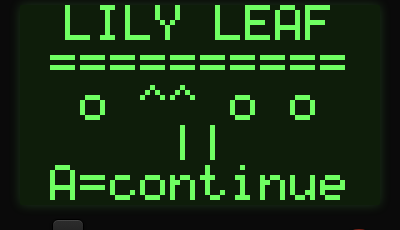
It's a parser text adventure on a simulated tiny screen. The picker page describes the biology with the game's verbs called out in amber — that's how you learn the vocabulary. Each room transition shows you a labeled ASCII art card (LILY LEAF, ATTACHED, FIRST TIER, COLONY) with an "A=continue" prompt so you always know how to advance. The full sequence is six commands.
The same game ships in three input modes — pick whichever feels best:
- Letter Wheel — on-screen wheel; cycle A–Z with the d-pad; A commits a letter, B backspaces. The authentic Thumby-hardware experience.
- Predictive Wheel — wheel + autocomplete; press → to accept the engine's suggested word.
- QWERTY Grid — 10×3 on-screen keyboard with a directional cursor.
In all three, you can also just type on your physical keyboard. The on-screen UI is touch-friendly; your keyboard is always the fast path.
Controls
| Key | Action |
|---|---|
Arrow keys | D-pad |
Z / Enter / Space | A button |
X / Backspace / Esc | B button |
Letter keys | Type directly into parser buffer (works in any mode) |
M | Mute / unmute |
Hold → | Fast-forward marquee text |
Two downloads
- Browser bundle (
connection_rotifer.zip) — extract anywhere and openindex.html. The picker page lets you switch between the three control modes; the game files are siblings in the same folder. The picker's iframe paths are relative, so the folder is self-contained — no server needed. - Thumby device build (
connection_thumby.zip) — containsConnection.pyand a step-by-step install guide. Drop the file into your Thumby's/Games/Connection/folder via the official Thumby web IDE at tinycircuits.github.io. The game then appears in the Thumby's menu like any other.
About the biology (real, briefly)
Floscularia ringens is a cosmopolitan sessile rotifer of class Monogononta. Hatchlings are free-swimming but cannot feed; within a day they must attach to a substrate (typically the underside of a water lily leaf), undergo a morphological transformation where the corona develops four wide lobes and the foot elongates, and only then begin to feed via filter currents. They construct their tubes from rounded pellets of bacteria and detritus held by mucus secretion. The "Melicerta" name was applied to Floscularia in error for over a century; Harring's 1913 revisions reassigned it, but the older name persists in the literature.
About Tharser — coming soon
Tharser is a parser-IF authoring engine under active development. The web emulator wrapping this game on the page, and the MicroPython runtime on the Thumby device, are both Tharser. Same engine, two targets. Built on Gunpei Yokoi's withered technology principle: deliberately old, proven tools used in surprising new ways.
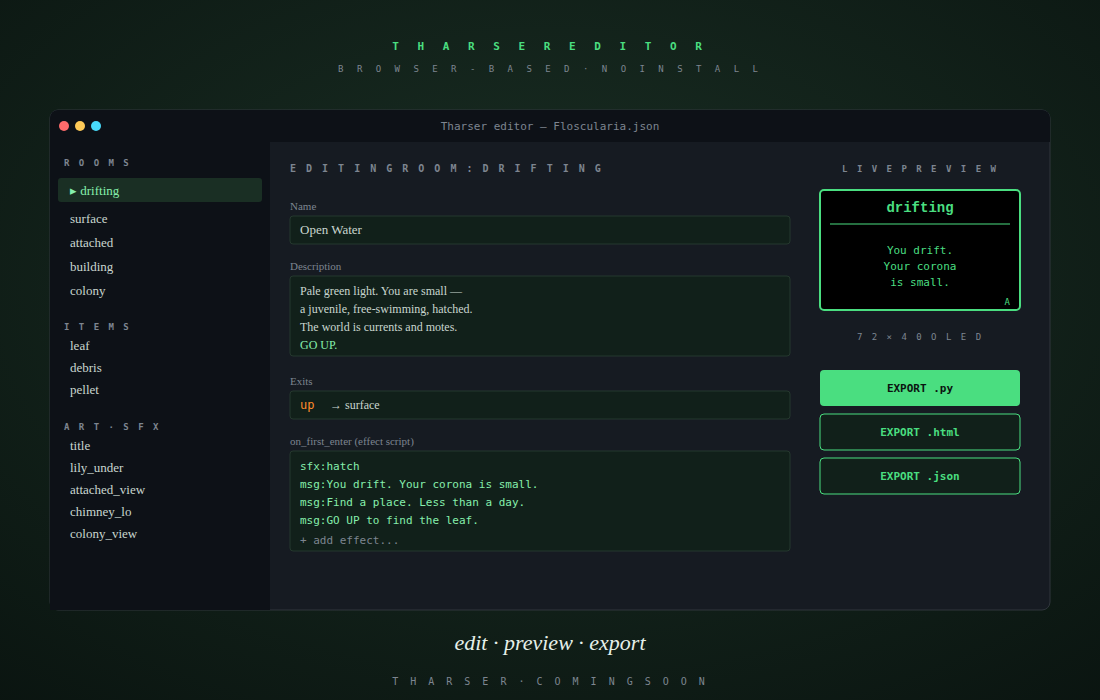
This Floscularia game is a proof of concept — a small showcase of what the engine can do: parser logic with multi-stage puzzles, three input schemes (letter wheel / predictive wheel / QWERTY), labeled ASCII art cutscenes with explicit "A to continue" prompts, and procedural piezo-style audio. The full editor — runs in your browser, no install — ships soon, along with a complete authoring guide and several example games.
Follow Outgrabe on itch.io for the release announcement.
Made by Outgrabe with the Tharser engine. Engine MIT-licensed, game CC-BY-SA 4.0.
Download
Click download now to get access to the following files:
Development log

Leave a comment
Log in with itch.io to leave a comment.